Saturday, February 18, 2012

February

2024

Willow Tree: 4 pansies, 2 purple petunias, 1 clown striped petunia so ridiculous I couldn't resist it, a basil badly in need of repotting, fingers crossed, rosemary, and some cucumbers. Also bacopa, little white flowers, and an African bush daisy, euryops.


2023
2/9/23 Planted 8 of the pink tall weedy things I got at Sweet Bay, 4 pansies, all different colors, offset with some garlic chives, and a native porterweed.  Lots to go to fill in where I did away with all that ganges primrose that froze. Things are just coming back to life, milkweed, etc.

2022
Those chickens. 


To Do:  Order caladium bulbs for front, near palm tree. Prune cassia & Texas sage. Propagate crossandra. 


 2.5 - 3 foot tall. Blooms late spring through early fall. Perennial. Germination is 2 to 3 weeks. Space 1 to 1 1/2 feet apart. 

2019

New plantings

2/17, I planted a palm in front of the garage, with some milkweed I'd started from seed and some Schwacke magentas in front of that.  A nice little bed, I hope. Love the combo of magenta and orange. If everything grows and blooms.   

2/16, Started some amber wheels gaillardia, gaillardia aristata,  which I ordered from Swallow Tail Garden Seeds.
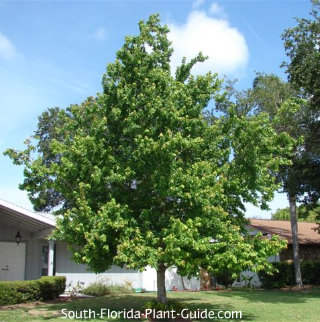
May get to be 40' tall. Leaves change color in the fall and then drop. DIED

2/16 Planted the Florida Maple which Duke Energy obligingly gave us.  The directions explained how to make a 'moat' around a young tree. Bury the tree level with the ground, but then build up a moat of earth around it so that it can access more water.  Clever.  Might be too late for the fig tree. 

Dividing and repotting: the Fancy Fern, the oyster plants which got so stepped on by the termite guys. Moved the baby beautyberry to a nice sunny spot nearer the fence. It seems to be surviving its uprooting and is putting out new buds. I'm hoping I'll have a longer and more beautiful blooming and berry show for it in this sunnier spot. The cranberry hibiscus are productive but they get so scraggly.

Rooting: Lucille's bays. One might actually make it. Two pots are still green. Update: Nope


2018


Just got back from the Saturday Morning Market where I purchased a mecardonia "little sunshine", a very cute little creeper which I hope will do for me what I thought the Ganges primrose would do last year.  I plan on propagating it and lining paths with it. Also, it would look terrific with my variegated sanseverria. The mecardonia requires full sun to part shade, which makes it a great choice for the front yard. NOTE; EXCEPT THAT IT IS AN ANNUAL.

Broke down and got a polka dot plant.  Think I'll put it by the back door, and maybe propagate a few buddies for it. 
2012
Yesterday, heavy rains. Today, a perfect day for gardening. The air was cool and moist on my cheek, the soil soft, and the weeds unsuspecting.  I was sad that Nov, Dec and Jan had left me so uninterested in the Great Outdoors. But no, as a good peasant, I was just busy laying low -- making new brooms and whittling nutcrackers -- until springtime.

Since we're having such a mild winter, it's safe (I hope!) to prune back all the dead coleus, the blue porterweed (and to weed that blue porterweed) and to try to come to some kind of conclusion about the beach sunflower which promises to overrun the front yard.  Potted up some brugmansia (???) cuttings that very obligingly rooted in just three weeks.  Planted out some nice pink Mexican petunias that I hope will do OK in our damp soil. If I remember to water them.

From Care of Injured and Orphaned Squirrels by  R. Avery Bennett, DVM. MS. Diplomate
ACVS College of veterinary Medicine, University of Florida Gainesville, Fl.
In north central Florida the birthing seasons are February-April and July-October, with a 44 day gestation period. Litters average 2.5 offspring in winter have been known to stay with their mothers for 3 to 9 months.

During the first week baby squirrels are pink with no hair and closed ears and eyes. At two weeks age squirrels turn a pinkish-gray color. The third week brings tiny hairs to the body and the hair on the back darkens. At 3.5-4 weeks the ears begin to unfold, fur starts to show at the nose and tail and spreads toward the body, turning brown on the muzzle and eyelids. Fur appears on the stomach and the incisors push through.. At 4-5 weeks there is a line velvet hair coat. Silver fur appears on the dorsal aspect of the tail. The eyes open at about 5 1/3 weeks and the squirrel begins to stand.

Tuesday, November 29, 2011

Beautiful bird baths

Leaves by Jenny at www.leavesbyjenney.com  sells leaf shaped waterfalls you should check out.

Sunday, November 27, 2011

Bokashi

Compost Guy talks about bokashi -- how to do it and how to make it.  Can't wait! I'm getting my buckets now!

Bokashi Bran


2lbs Bokashi Bran
Extra bokashi bran to use with your bokashi composting kit or around the house.  Bokashi bran can be added to litter boxes to help control the odor.  Bokashi can be mixed into traditional compost piles to help inoculate the pile.  It can also be added to potting soil or mixed into the soil with transplants to help with the decomposition of organic matter and to inoculate the area with beneficial microorganisms, both of which help with plant growth.
How to Use:
Sprinkle a small handful of bran over each 2″ layer of scraps and press the layers down to ensure contact and to remove airspace.  Harder to break down items such as corn cobs, avocado skins, meat, and cheese will require more bran.  Green mold is bad, white mold is good.  If you are seeing green mold then you need to add more bran.  Foul odors are also and indication that proper fermentation isn’t taking place.  If you smell foul odors then you need to add more bran.  Proper fermentation should have a sweet, vinegar like smell.  At 70 degrees complete fermentation takes about 14 days.  Cooler temperatures will require more time to properly ferment.
Ingredients:  Wheat Bran, Filtered Water, Blackstrap Molasses, Azomite, Sea Salt, EM
Questions?

Price: $11.99

No, I'm MAKING my buckets now!  Lisa's two bucket trick

Make that THREE buckets:

http://www.bokashicycle.com/FAQ.html

Can I use Bokashi culture mix to get rid of my pet's droppings?

Yes. We do not recommend using Bokashi fermentation to process animal feces because there is a small risk that organisms in the feces if then processed and placed in a vegetable garden could cause problems. If you are going to process that material and place it in the ground for ornamental plants, it will work well and get rid of the odors and mess that can be hard to otherwise handle. You should mix the feces with other plant material, leaves, or wood chips so that the Bokashi culture mix has a rich amount of material to process. Then after fermentation bury it in the ground covering it with about 8 inches of soil.

Can I use Bokashi culture mix with my kitty litter?

Yes. If you add a handful of Bokashi culture mix to the kitty litter each week, it will greatly help in reducing the odors of ammonia and waste in the litter. You can then ferment (pickle) the litter mixing it with leaves and other organic debris and use this product in the soil for ornamental plants. Do not put this material in your vegetable garden. There is no harm for your pet in using Bokashi in the litter.

Wednesday, October 12, 2011

Flavia or yellowtop (or goldenrod) blooms anew

I visited Marie Selby this last week (I'm in love with a strangler fig, i. e. Moreton Bay ficus -- who cares if it strangles its host? Vampires are in this year.) and during our garden tours, I kept noticing nice little straggles of goldenrod out of the corner of my eye. Goldenrod! Why was Marie Selby's blooming and mine wasn't?

So I came home and it was in bloom! It's very ethereal and light hearted, and I like the height of it, between two and three feet tall, but not so bossy and dense as that beach sunflower. It's such a joyful event when a plant blooms again.